

Request a Demo

Back
Case Study: Guard Home Warranty

Client
A Home Warranty Provider

Location
Chicago, US

Goal
Faster, more accurate claim review without losing the human touch
Objectives
- Reduce claims reps workload
- Make operations scalable
- Reducing a need to hire and train new claims reps
- Reduce response errors on Claims
- Reduce inaccurate payout approvals
Background
Working with hundreds of clients every day requires both an individual approach and a strict workflow.
Claim’s manager checklist includes a wide range of details they should check for every claim:
- Client’s plan inclusions
- Insurance activation
- Payout limits check
- Contract coverage exclusions (global + item-specific, for 30+ different home systems/appliances)
- Home inspection findings review and juggling between hundreds of different Home Inspection
- Call notes
- Technician assessments
- Dozens of denial qualifiers and documentation requirements
Keeping all of this in memory is both risky and slows down the claims rep work. That’s why, the claims ops becomes the biggest roadblock for Insurance providers:
- It’s the main operational process for every Insurance company
- As you go grow - you hire new people, which is costly and requires a lot of training
- Human factor: something could be missed during the verification process and the mistake can cost your business thousands.
Our Approach
Discovery
Accurate coverage validation is one of the most critical parts of any insurance business.
This is why our first goal was to map all possible coverage scenarios.
- We started with analyzing historical claims: the AI agent classified past messages, response types and conditions behind why they were sent.
- We structured the contract terms for standard and item-specific exclusions into validation rules for the AI agent to rely on.
- Documented plan types and their differences, add-ons, and coverage amount limits.
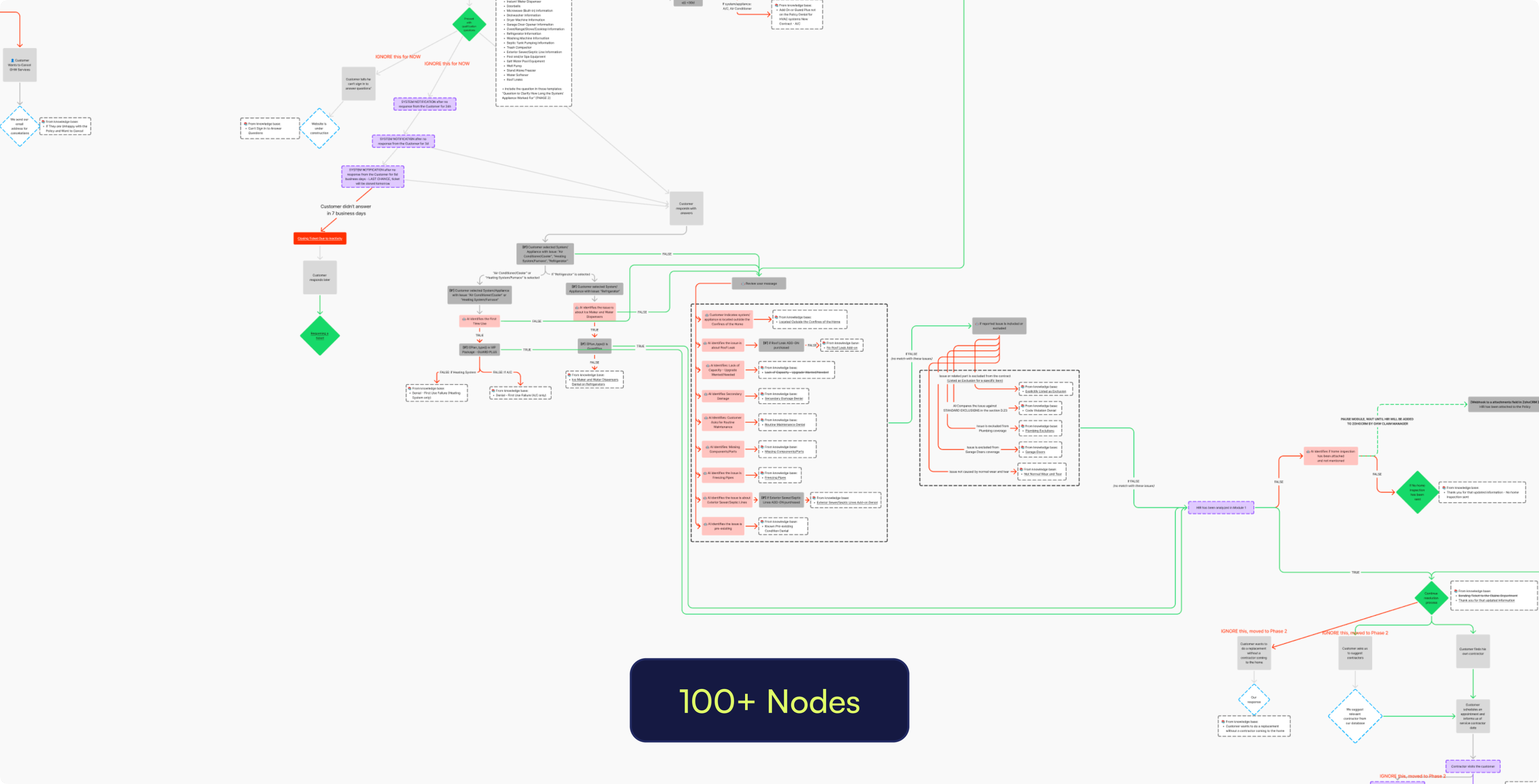
- We created an end-to-end workflow visualization, including branches, dependencies and conditions.
- As a result, we cataloged 100+ validation rules that drive approvals/denials or additional info requests.
Now, all this information will be used for the AI agent setup, so it validates claims and suggests answers correctly.
The Solution
AI Agents Configuration
Coverage Rules Validation
The main goal was to make sure every AI suggested response is reliable.
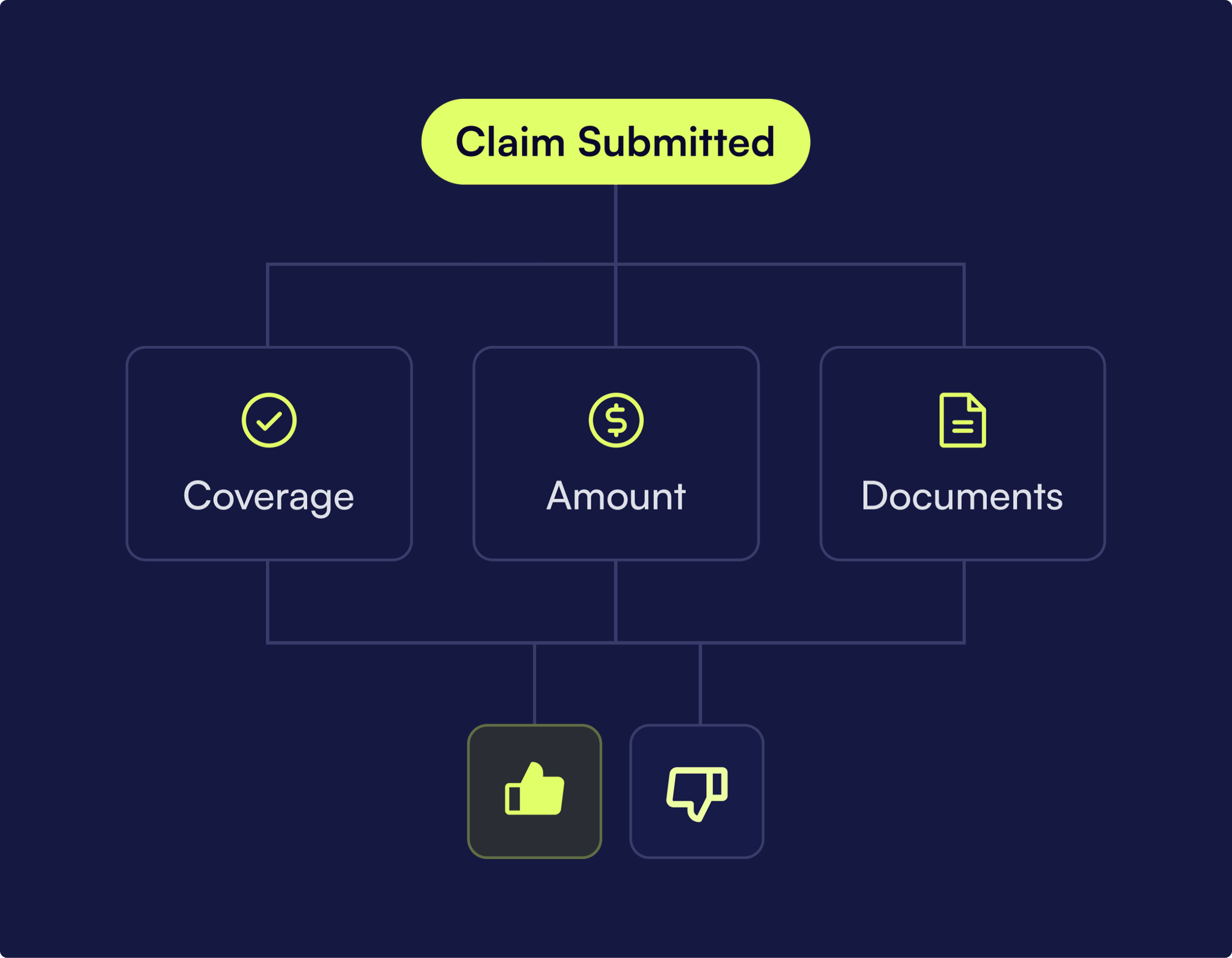
A single LLM prompt with the claim thread is too fragile for coverage validation. Claims decisions depend on many separate checks: plan coverage, activation dates, payout limits, exclusions, required documents, inspection findings, calls context, technician assessments, etc.
To support the accurate decisions and avoid hallucinations, we implemented a Multi-Agent Validation Pipeline with 100+ Rules, where each agent validates a single coverage rule.
This creates a structured chain of checks that mirrors how a trained claims manager would review a case.
As a result, the system can validate all required conditions correctly and suggest the next action together with a response draft.
Calls / Documents Ingestion
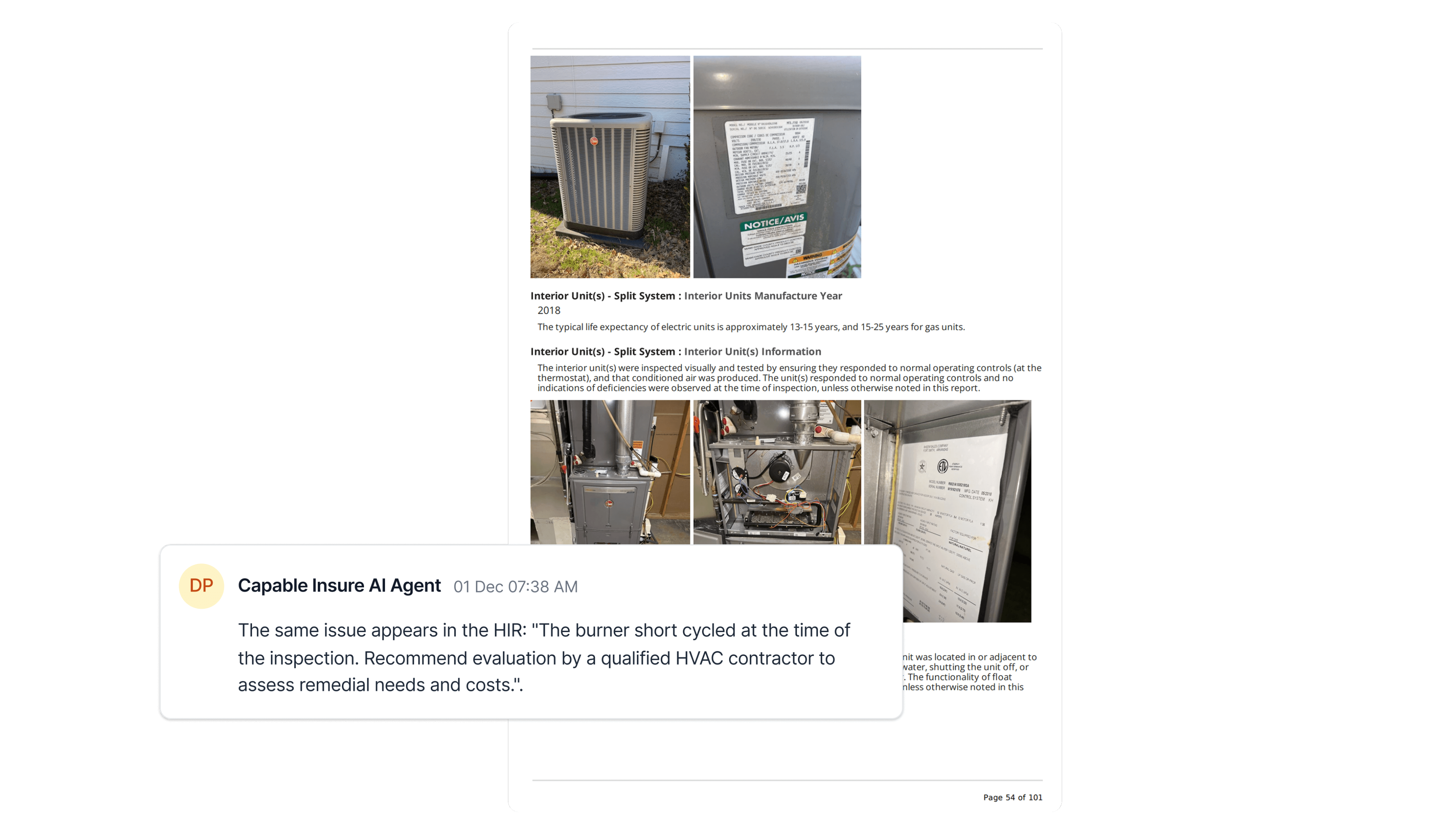
To improve accuracy, we included essential claim artifacts in the analysis: Home Inspection Report PDFs, technician notes, and call transcripts. These data sources were connected to the AI agent’s validation pipeline so it has all the supporting evidence to make a decision.
Human-in-the-Loop
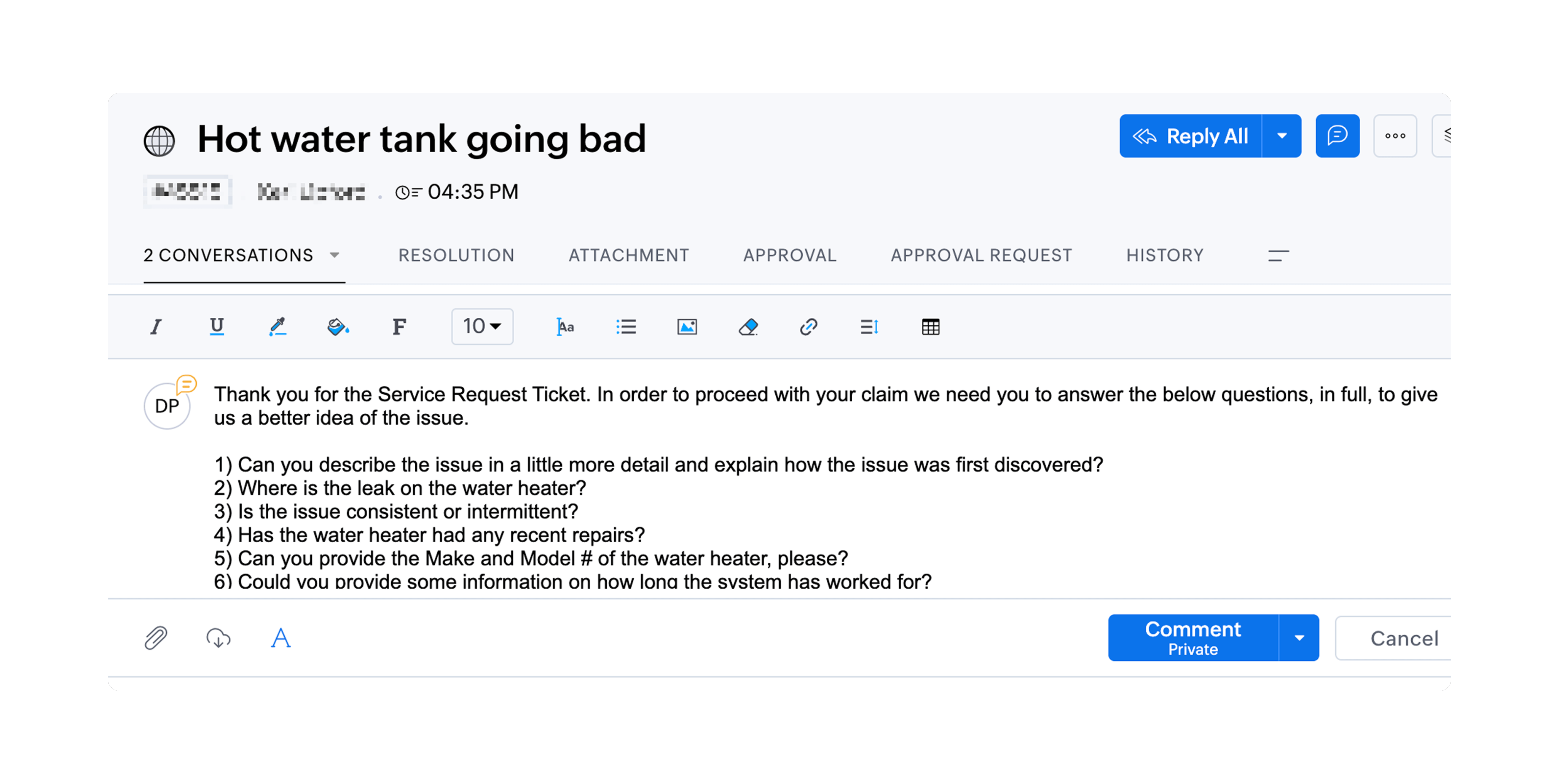
We embedded the AI Agent directly to client’s claims infrastructure (ZohoDesk), to have the responses drafted inside the ticketing system for a claims rep to review.
The AI prepares the suggested response, while the claims rep keeps final control over approval, edits, and sending.
Decision reasoning
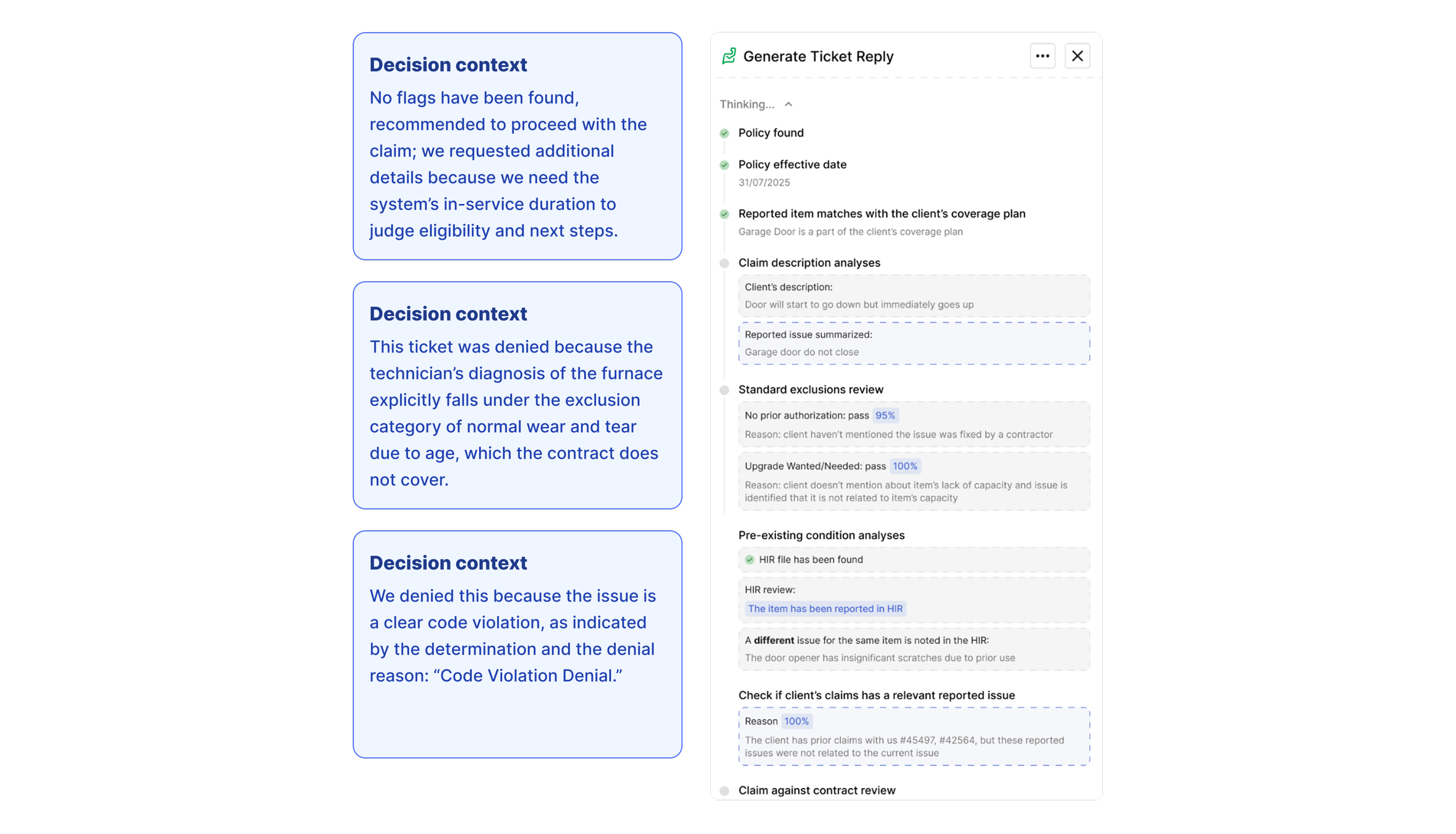
Each AI response comes with decision reasoning, explaining why this specific response was suggested.
In denial scenarios, the reasoning references the applicable coverage term, so the claims rep can review the logic before sending the final message.
1-Second Response Generation Latency
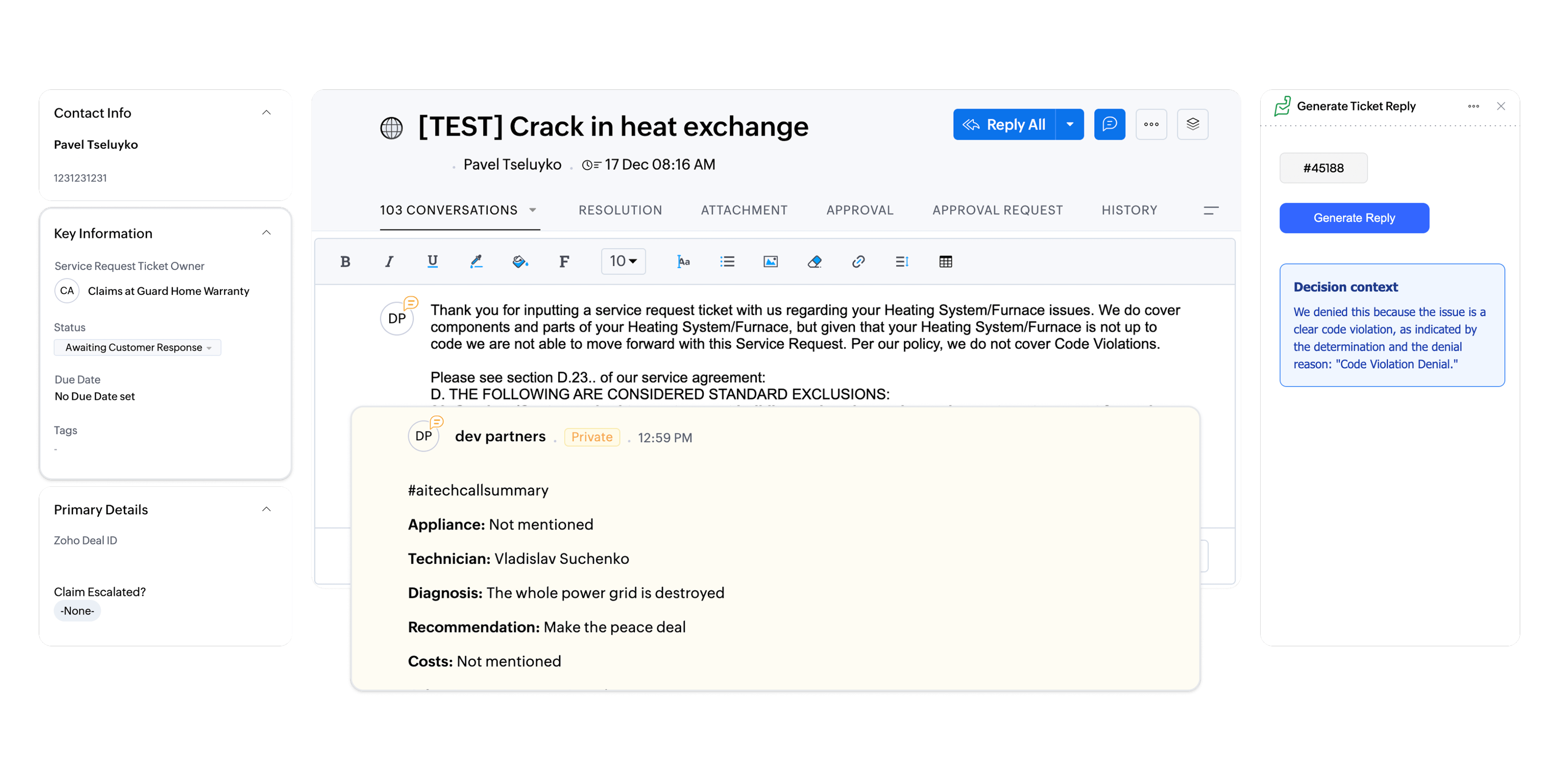
As the validation system is large and needs time to process analysis, it gets triggered as soon as a client’s message hits the ticket.
It keeps the claims rep user experience fast – by the time the claims rep clicks “Generate,” the suggested response populates in around 1 second.
Compliance Agent Before Payout Approval
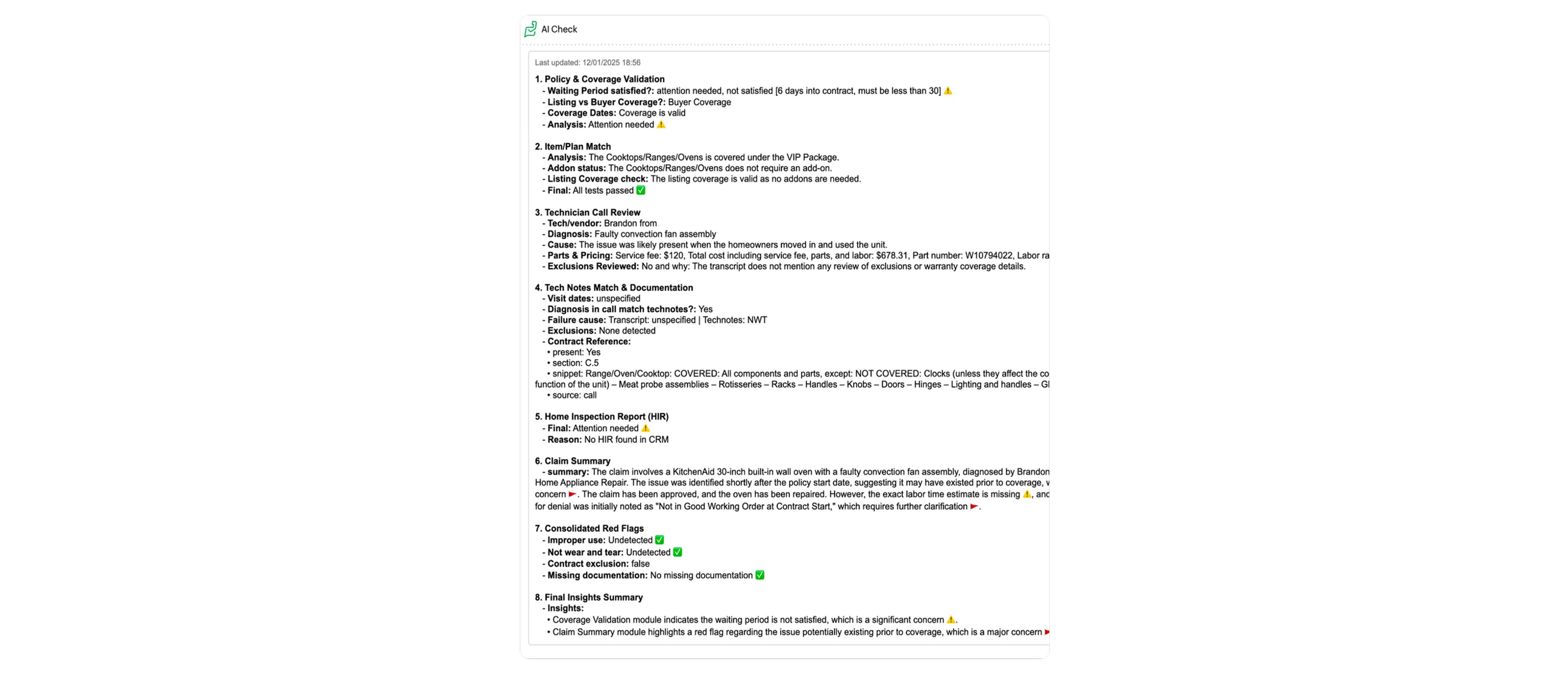
Before a claims rep approves a payout, the Compliance Agent runs a final validation check across all coverage parameters.
It reviews the full claim context against the coverage rules, including all supporting evidence in the pipeline, and then flags conflicts for the claims rep to review.
Outcomes for Guard Home Warranty

Faster resolutions for customers: ~80% reduction in time to answer a client message.
~30% improvement in decisions accuracy
Easier operational scalability.
Reduced manual checks.and lower cognitive load for reps.

See what Capable Insure can do for you
Book a discovery call

Reduce Operational Costs & Training Time for New Personal
Minimize Human Errors to Avoid Costly Mistakes
Reduce Claim Cycle & Increase Your CSAT
Our team will audit your claims process and prepare a full game plan of integrating Capable Insure.

Request a Demo
Back
Case Study: Guard Home Warranty
Client
A Home Warranty Provider
Location
Chicago, US
Goal
Faster, more accurate claim review without losing the human touch
Objectives
- Reduce claims reps workload
- Make operations scalable
- Reducing a need to hire and train new claims reps
- Reduce response errors on Claims
- Reduce inaccurate payout approvals
Background
Working with hundreds of clients every day requires both an individual approach and a strict workflow.
Claim’s manager checklist includes a wide range of details they should check for every claim:
- Client’s plan inclusions
- Insurance activation
- Payout limits check
- Contract coverage exclusions (global + item-specific, for 30+ different home systems/appliances)
- Home inspection findings review and juggling between hundreds of different Home Inspection
- Call notes
- Technician assessments
- Dozens of denial qualifiers and documentation requirements
Keeping all of this in memory is both risky and slows down the claims rep work. That’s why, the claims ops becomes the biggest roadblock for Insurance providers:
- It’s the main operational process for every Insurance company
- As you go grow - you hire new people, which is costly and requires a lot of training
- Human factor: something could be missed during the verification process and the mistake can cost your business thousands.
Our Approach
Discovery
Accurate coverage validation is one of the most critical parts of any insurance business.
This is why our first goal was to map all possible coverage scenarios.
- We started with analyzing historical claims: the AI agent classified past messages, response types and conditions behind why they were sent.
- We structured the contract terms for standard and item-specific exclusions into validation rules for the AI agent to rely on.
- Documented plan types and their differences, add-ons, and coverage amount limits.
- We created an end-to-end workflow visualization, including branches, dependencies and conditions.
- As a result, we cataloged 100+ validation rules that drive approvals/denials or additional info requests.
Now, all this information will be used for the AI agent setup, so it validates claims and suggests answers correctly.
The Solution
AI Agents Configuration
Coverage Rules Validation
The main goal was to make sure every AI suggested response is reliable.
A single LLM prompt with the claim thread is too fragile for coverage validation. Claims decisions depend on many separate checks: plan coverage, activation dates, payout limits, exclusions, required documents, inspection findings, calls context, technician assessments, etc.
To support the accurate decisions and avoid hallucinations, we implemented a Multi-Agent Validation Pipeline with 100+ Rules, where each agent validates a single coverage rule.
This creates a structured chain of checks that mirrors how a trained claims manager would review a case.
As a result, the system can validate all required conditions correctly and suggest the next action together with a response draft.
Calls / Documents Ingestion
To improve accuracy, we included essential claim artifacts in the analysis: Home Inspection Report PDFs, technician notes, and call transcripts. These data sources were connected to the AI agent’s validation pipeline so it has all the supporting evidence to make a decision.
Human-in-the-Loop
We embedded the AI Agent directly to client’s claims infrastructure (ZohoDesk), to have the responses drafted inside the ticketing system for a claims rep to review.
The AI prepares the suggested response, while the claims rep keeps final control over approval, edits, and sending.
Decision reasoning
Each AI response comes with decision reasoning, explaining why this specific response was suggested.
In denial scenarios, the reasoning references the applicable coverage term, so the claims rep can review the logic before sending the final message.
1-Second Response Generation Latency
As the validation system is large and needs time to process analysis, it gets triggered as soon as a client’s message hits the ticket.
It keeps the claims rep user experience fast – by the time the claims rep clicks “Generate,” the suggested response populates in around 1 second.
Compliance Agent Before Payout Approval
Before a claims rep approves a payout, the Compliance Agent runs a final validation check across all coverage parameters.
It reviews the full claim context against the coverage rules, including all supporting evidence in the pipeline, and then flags conflicts for the claims rep to review.
Outcomes for Guard Home Warranty
Faster resolutions for customers: ~80% reduction in time to answer a client message.
~30% improvement in decisions accuracy
Easier operational scalability.
Reduced manual checks.and lower cognitive load for reps.
See what Capable Insure can do for you
Book a discovery call
Reduce Operational Costs & Training Time for New Personal
Minimize Human Errors to Avoid Costly Mistakes
Reduce Claim Cycle & Increase Your CSAT
Our team will audit your claims process and prepare a full game plan of integrating Capable Insure.


Request a Demo
Back
Case Study: Guard Home Warranty
Client
A Home Warranty Provider
Location
Chicago, US
Goal
Faster, more accurate claim review without losing the human touch
Objectives
- Reduce claims reps workload
- Make operations scalable
- Reducing a need to hire and train new claims reps
- Reduce response errors on Claims
- Reduce inaccurate payout approvals
Background
Working with hundreds of clients every day requires both an individual approach and a strict workflow.
Claim’s manager checklist includes a wide range of details they should check for every claim:
- Client’s plan inclusions
- Insurance activation
- Payout limits check
- Contract coverage exclusions (global + item-specific, for 30+ different home systems/appliances)
- Home inspection findings review and juggling between hundreds of different Home Inspection
- Call notes
- Technician assessments
- Dozens of denial qualifiers and documentation requirements
Keeping all of this in memory is both risky and slows down the claims rep work. That’s why, the claims ops becomes the biggest roadblock for Insurance providers:
- It’s the main operational process for every Insurance company
- As you go grow - you hire new people, which is costly and requires a lot of training
- Human factor: something could be missed during the verification process and the mistake can cost your business thousands.
Our Approach
Discovery
Accurate coverage validation is one of the most critical parts of any insurance business.
This is why our first goal was to map all possible coverage scenarios.
- We started with analyzing historical claims: the AI agent classified past messages, response types and conditions behind why they were sent.
- We structured the contract terms for standard and item-specific exclusions into validation rules for the AI agent to rely on.
- Documented plan types and their differences, add-ons, and coverage amount limits.
- We created an end-to-end workflow visualization, including branches, dependencies and conditions.
- As a result, we cataloged 100+ validation rules that drive approvals/denials or additional info requests.
Now, all this information will be used for the AI agent setup, so it validates claims and suggests answers correctly.
The Solution
AI Agents Configuration
Coverage Rules Validation
The main goal was to make sure every AI suggested response is reliable.
A single LLM prompt with the claim thread is too fragile for coverage validation. Claims decisions depend on many separate checks: plan coverage, activation dates, payout limits, exclusions, required documents, inspection findings, calls context, technician assessments, etc.
To support the accurate decisions and avoid hallucinations, we implemented a Multi-Agent Validation Pipeline with 100+ Rules, where each agent validates a single coverage rule.
This creates a structured chain of checks that mirrors how a trained claims manager would review a case.
As a result, the system can validate all required conditions correctly and suggest the next action together with a response draft.
Calls / Documents Ingestion
To improve accuracy, we included essential claim artifacts in the analysis: Home Inspection Report PDFs, technician notes, and call transcripts. These data sources were connected to the AI agent’s validation pipeline so it has all the supporting evidence to make a decision.
Human-in-the-Loop
We embedded the AI Agent directly to client’s claims infrastructure (ZohoDesk), to have the responses drafted inside the ticketing system for a claims rep to review.
The AI prepares the suggested response, while the claims rep keeps final control over approval, edits, and sending.
Decision reasoning
Each AI response comes with decision reasoning, explaining why this specific response was suggested.
In denial scenarios, the reasoning references the applicable coverage term, so the claims rep can review the logic before sending the final message.
1-Second Response Generation Latency
As the validation system is large and needs time to process analysis, it gets triggered as soon as a client’s message hits the ticket.
It keeps the claims rep user experience fast – by the time the claims rep clicks “Generate,” the suggested response populates in around 1 second.
Compliance Agent Before Payout Approval
Before a claims rep approves a payout, the Compliance Agent runs a final validation check across all coverage parameters.
It reviews the full claim context against the coverage rules, including all supporting evidence in the pipeline, and then flags conflicts for the claims rep to review.
Outcomes for Guard Home Warranty
Faster resolutions for customers: ~80% reduction in time to answer a client message.
~30% improvement in decisions accuracy
Easier operational scalability.
Reduced manual checks.and lower cognitive load for reps.
See what Capable Insure can do for you
Book a discovery call
Reduce Operational Costs & Training Time for New Personal
Minimize Human Errors to Avoid Costly Mistakes
Reduce Claim Cycle & Increase Your CSAT
Our team will audit your claims process and prepare a full game plan of integrating Capable Insure.


Request a Demo
Back
Case Study: Guard Home Warranty
Client
A Home Warranty Provider
Location
Chicago, US
Goal
Faster, more accurate claim review without losing the human touch
Objectives
- Reduce claims reps workload
- Make operations scalable
- Reducing a need to hire and train new claims reps
- Reduce response errors on Claims
- Reduce inaccurate payout approvals
Background
Working with hundreds of clients every day requires both an individual approach and a strict workflow.
Claim’s manager checklist includes a wide range of details they should check for every claim:
- Client’s plan inclusions
- Insurance activation
- Payout limits check
- Contract coverage exclusions (global + item-specific, for 30+ different home systems/appliances)
- Home inspection findings review and juggling between hundreds of different Home Inspection
- Call notes
- Technician assessments
- Dozens of denial qualifiers and documentation requirements
Keeping all of this in memory is both risky and slows down the claims rep work. That’s why, the claims ops becomes the biggest roadblock for Insurance providers:
- It’s the main operational process for every Insurance company
- As you go grow - you hire new people, which is costly and requires a lot of training
- Human factor: something could be missed during the verification process and the mistake can cost your business thousands.
Our Approach
Discovery
Accurate coverage validation is one of the most critical parts of any insurance business.
This is why our first goal was to map all possible coverage scenarios.
- We started with analyzing historical claims: the AI agent classified past messages, response types and conditions behind why they were sent.
- We structured the contract terms for standard and item-specific exclusions into validation rules for the AI agent to rely on.
- Documented plan types and their differences, add-ons, and coverage amount limits.
- We created an end-to-end workflow visualization, including branches, dependencies and conditions.
- As a result, we cataloged 100+ validation rules that drive approvals/denials or additional info requests.
Now, all this information will be used for the AI agent setup, so it validates claims and suggests answers correctly.
The Solution
The AI Agents Setup
Coverage Rules Validation
The main goal was to make sure every AI suggested response is reliable.
A single LLM prompt with the claim thread is too fragile for coverage validation. Claims decisions depend on many separate checks: plan coverage, activation dates, payout limits, exclusions, required documents, inspection findings, calls context, technician assessments, etc.
To support the accurate decisions and avoid hallucinations, we implemented a Multi-Agent Validation Pipeline with 100+ Rules, where each agent validates a single coverage rule.
This creates a structured chain of checks that mirrors how a trained claims manager would review a case.
As a result, the system can validate all required conditions correctly and suggest the next action together with a response draft.
Calls / Documents Ingestion
To improve accuracy, we included essential claim artifacts in the analysis: Home Inspection Report PDFs, technician notes, and call transcripts. These data sources were connected to the AI agent’s validation pipeline so it has all the supporting evidence to make a decision.
Human-in-the-Loop
We embedded the AI Agent directly to client’s claims infrastructure (ZohoDesk), to have the responses drafted inside the ticketing system for a claims rep to review.
The AI prepares the suggested response, while the claims rep keeps final control over approval, edits, and sending.
Decision reasoning
Each AI response comes with decision reasoning, explaining why this specific response was suggested.
In denial scenarios, the reasoning references the applicable coverage term, so the claims rep can review the logic before sending the final message.
1-Second Response Generation Latency
As the validation system is large and needs time to process analysis, it gets triggered as soon as a client’s message hits the ticket.
It keeps the claims rep user experience fast – by the time the claims rep clicks “Generate,” the suggested response populates in around 1 second.
Compliance Agent Before Payout Approval
Before a claims rep approves a payout, the Compliance Agent runs a final validation check across all coverage parameters.
It reviews the full claim context against the coverage rules, including all supporting evidence in the pipeline, and then flags conflicts for the claims rep to review.
Outcomes for Guard Home Warranty
Faster resolutions for customers: ~80% reduction in time to answer a client message.
~30% improvement in decisions accuracy.
Reduced manual checks and lower cognitive load for claims reps.
See what Capable Insure can do for you
Book a discovery call
Reduce Operational Costs & Training Time for New Personal
Minimize Human Errors to Avoid Costly Mistakes
Reduce Claim Cycle & Increase Your CSAT
Our team will audit your claims process and prepare a full game plan of integrating Capable Insure.